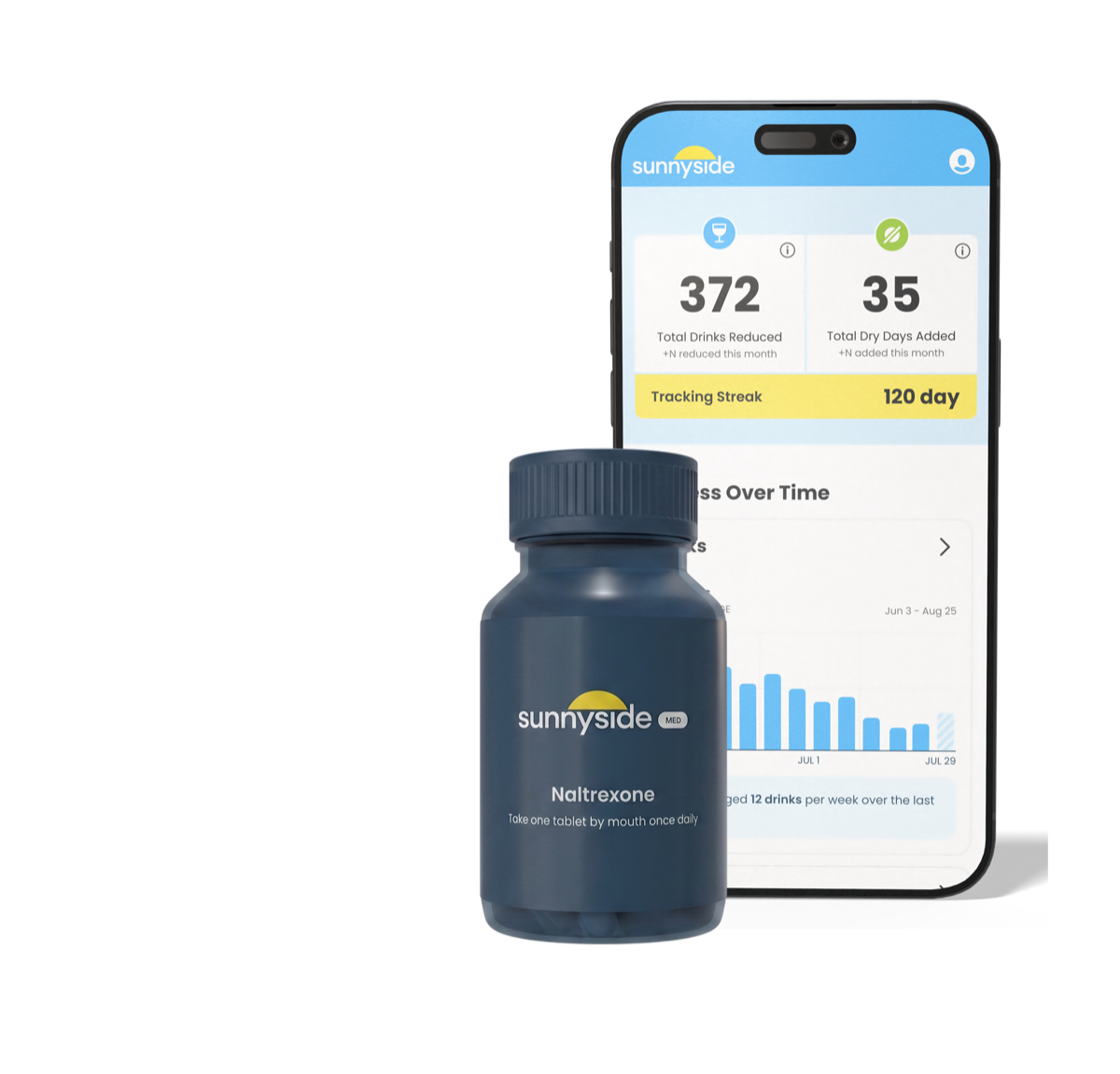
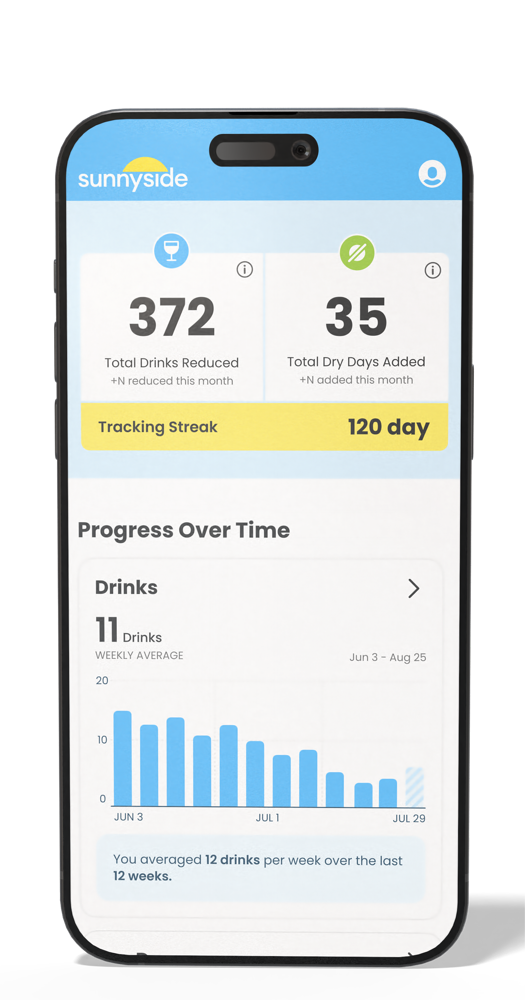
Sunnyside helps people develop a healthier relationship to alcohol using a science-backed, harm-reduction approach. Our members see major benefits, including a 33% average reduction in weekly drinks, improved sleep, a healthier diet, money saved, and an overall improved sense of well-being. Our efficacy is supported by a 2024 study in ACER you can read here. Sunnyside Med adds compounded naltrexone and a personalized care plan to our proven habit change program for even more complete care.
The 33% figure refers to the Sunnyside behavior-change program, not the compounded medication.
The 45.6% figure is an average reduction in daily drinks over 12 weeks among selected participants in an earlier Sunnyside Med program who tracked drinking on more than half of days. It comes from internal, self-reported, nonrandomized observational data for Med-First members; selection and missing follow-up may affect results. It is not a medication-only result or a guarantee of individual outcomes. The two-point graphic illustrates the relative reduction, not absolute drink counts or a week-by-week trend. Individual results vary.
Sunnyside Med provides access to a compounded medication, and is available only if prescribed by a licensed provider through our tele-health program. Sunnyside partners with a pharmacy that specializes in customizing compounded medications to meet unique patient needs. Compounded drugs are not FDA-approved, which means they have not undergone FDA premarket review for safety, effectiveness, and quality.
Sunnyside and Sunnyside Med are not designed to treat alcohol use disorder (AUD). For resources related to AUD, including how to get support, please visit the NIH website. We've also partnered with Moderation Management, a non-profit dedicated to reducing the harm caused by the misuse of alcohol.
Naltrexone is the active ingredient in our compounded medication. It is used to help with alcohol moderation or cessation. You should not take naltrexone if you use opioids—including prescription medications or street drugs—as it may cause sudden opioid withdrawal.
Common side effects may include: nausea, sleepiness, headache, dizziness, vomiting, decreased appetite, muscle cramps, joint pain, and trouble sleeping.
More serious risks can include liver injury or allergic reactions. Stop taking naltrexone and contact your provider if you experience symptoms like severe abdominal pain, dark urine, yellowing of the skin or eyes (jaundice), or a rash with fever.
These are not all the possible side effects. Tell your healthcare provider if you experience any side effects that bother you or don’t go away. Only take this medication as prescribed.
Copyright 2026 Cutback Coach, Inc. All rights reserved.